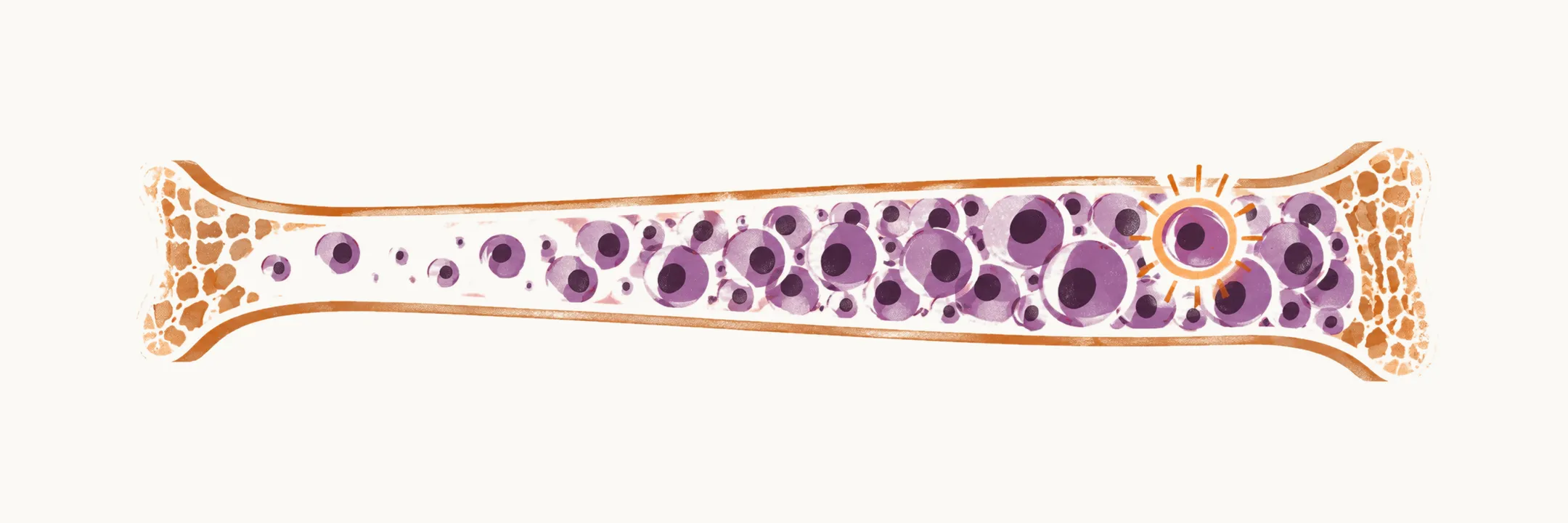
MGUS and the monoclonal gammopathies of clinical significance
MGUS is a premalignant clonal plasma cell disorder characterised by the presence of an M protein produced by a small B-cell/plasma cell clone in persons without features of symptomatic disease related to malignant disorders. Monoclonal gammopathies other than MGUS include an entity called monoclonal gammopathies of clinical significance (MGCS), which is a non-malignant monoclonal gammopathy characterised by two features:
- the presence of a clone with secretion of M proteins
- the presence of symptoms that are due to the M proteins or to the clone itself
MGCS is a heterogeneous field of monoclonal gammopathies that affect different organs, mostly because of M-protein precipitation: the skin, the kidney and the nerve.
Differential diagnosis of multiple myeloma
The main differential diagnosis in the case of MM is related to the previous stages of MM that could evolve to make MM, which are monoclonal gammopathy of undetermined significance (MGUS) and smoldering multiple myeloma (SMM).
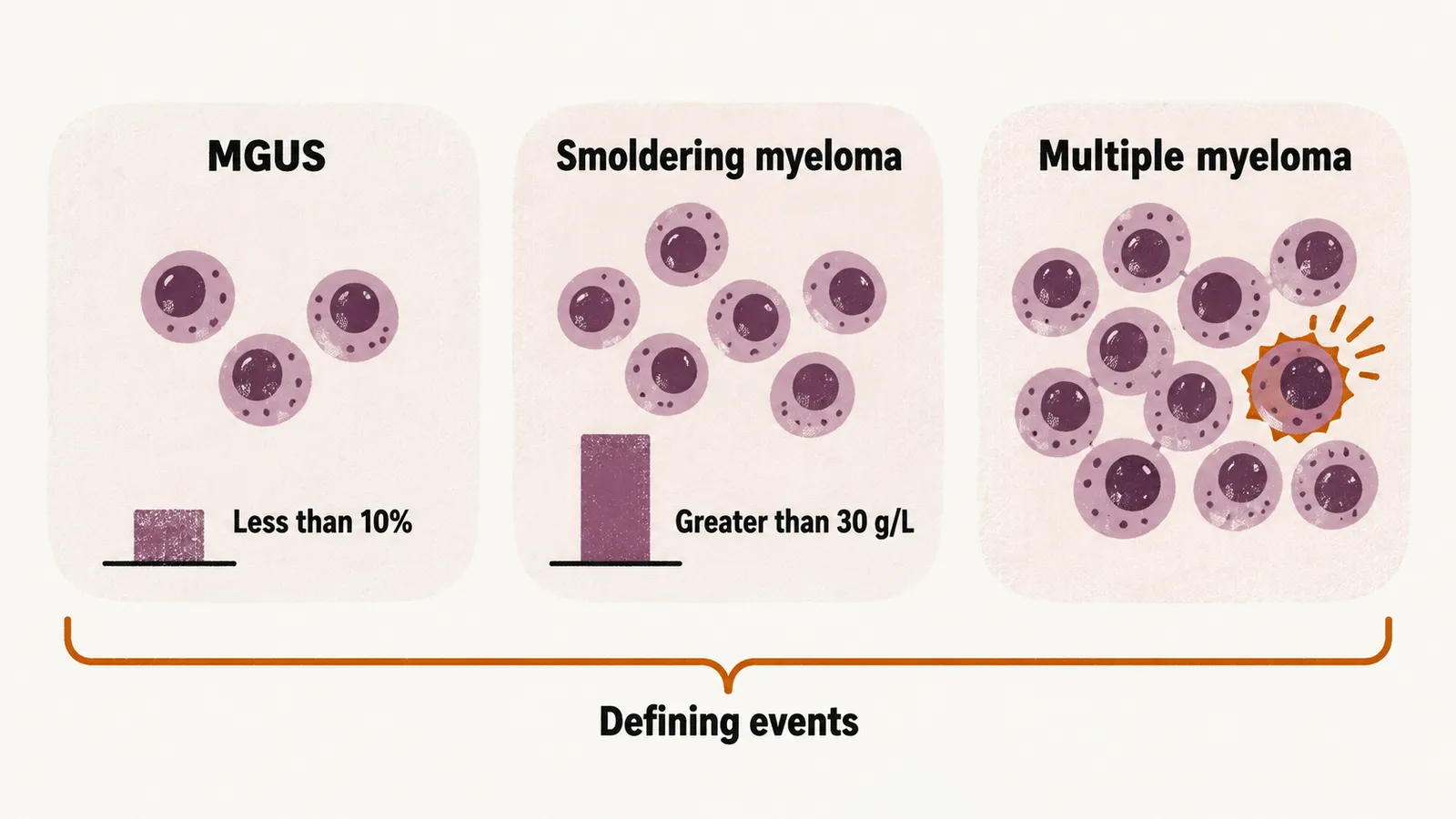
The approach for the differential diagnosis between MGUS, SMM and MM is based on three clinical findings:
- the percentage of clonal plasma cells in the bone marrow
- the concentration of monoclonal antibody in the serum or urine
- the presence or absence of myeloma defining events
Myeloma defining events are signs and symptoms that show end-organ damage made by plasma cell proliferation, and also biomarkers of malignancy. Together they are called SLiM-CRAB:
- signs and symptoms of end-organ damage: hypercalcemia, renal failure, anemia and bone lesions
- biomarkers of malignancy: a clonal bone marrow plasma cell percentage greater than 60%, an involved to uninvolved serum free light chain ratio greater than 100, and more than one focal lesion on MRI studies
The CRAB features are the damage the tumour has already done. The SLiM features are not damage yet, but they mark a clone whose biology predicts progression so soon that treatment is offered before the damage appears.
In the case of MGUS, three criteria below have to be met:
- bone marrow plasma cell percentage less than 10%
- serum monoclonal protein less than 30 g/L
- absence of myeloma defining events
The difference between MGUS and SMM is a quantitative difference. For SMM, both criteria below have to be met:
- one of the following, or both: serum monoclonal protein greater than 30 g/L or urinary monoclonal antibody greater than 500 mg/day; and/or clonal bone marrow plasma cells between 10% and 60%
- absence of myeloma defining events
The difference between SMM and MM is more qualitative, and it is based on just the presence of one or more of the myeloma defining events indicated above. A patient with the same marrow burden and the same M protein moves from SMM to MM once a defining event appears.
When a patient has an M spike or monoclonal antibody but the concentration of protein in the blood is so low that the patient can be considered low-risk for MGUS, the next step, rather than the criteria defined above, is to check the blood biomarkers. If none of the myeloma defining events, like hypercalcemia, anemia and others, is met, the bone marrow biopsy is not performed for this patient, because in patients who have a very low level of monoclonal antibody without any significant findings for myeloma defining events, the chance of having a bone marrow biopsy with a high percentage of plasma cells is less than 1%. So a bone marrow biopsy is not always needed when a monoclonal antibody is present.
Risk of progression and follow-up
MGUS is more than 50% of the cases related to monoclonal gammopathies that are seen in clinics. Its follow-up is based on the risk of progression to MM, which is 1% per year: for a patient with MGUS, the risk of not progressing to MM in the next year is 99%, in two years it is 98%, and so on.
This pattern of risk of progression from MGUS to MM gives a clinical importance to follow-up based on the age of the patient. For instance, a patient who is 75 years old with a life expectancy of 85 years has a 90% chance of being free from MM at the time of death, but a patient who is 45 years old with MGUS and a life expectancy of 85 years has a 60% chance of being free of MM progression. This shows that follow-up is worth more in the second case than in the first, because a younger patient has more years in which a slow annual risk can accumulate into disease.
The risk of progression to MM from SMM is about 10% per year in the first 5 years after diagnosis, and it falls after that; the risk of MGUS, by contrast, stays near 1% per year throughout.