Prognosis of MM
The single main predictor of prognosis of patients with MM is serum β2-microglobulin. β2-microglobulin is the light chain of HLA (the human leukocyte antigen molecule) on the surface of every nucleated cell, so it is shed into the blood as cells turn over; a high level therefore reflects a large tumour burden, and it is raised further when the kidneys fail to clear it. The combination of serum β2-microglobulin and albumin level is the basis of the three-stage ISS (International Staging System) staging system.
Some genetic factors also have a prognostic effect beside the β2-microglobulin and albumin level. The R-ISS is the combination of the ISS and other prognostic factors, and it is the one more frequently used these days.
Treatment of MM
Who is treated
Treatment for MM only applies to the patients who have myeloma defining events, which are SLiM-CRAB: the end-organ damage and the biomarkers of malignancy that separate active myeloma from its precursor states. The treatment for them depends on whether they are candidates for having autologous hematopoietic stem cell transplantation (HSCT) or not.
High-dose chemotherapy with autologous stem cell rescue
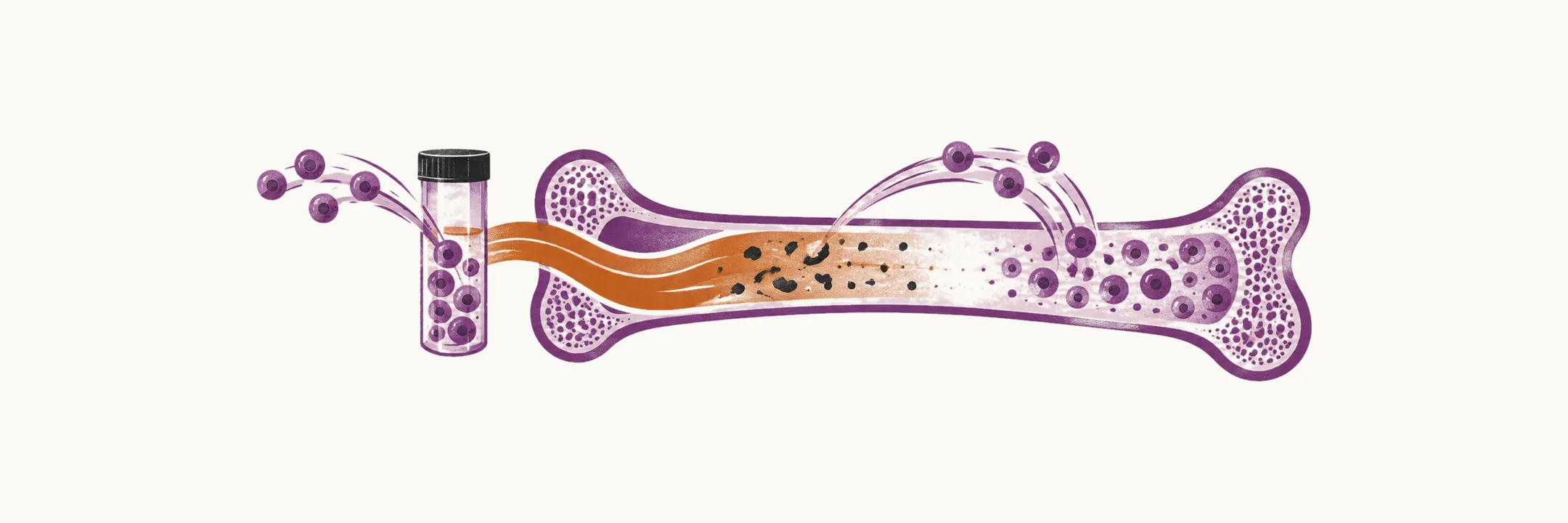
Beside having autologous HSCT, some chemotherapy agents have to be used for patients with MM. The use of chemotherapy for MM patients should be high dose, which kills all the HSCs (hematopoietic stem cells) in the patient; after chemotherapy with high dose there is no blood cell formation, which is the problem. Therefore, patients who should go for high-dose chemotherapy need autologous HSCT just after the use of high-dose chemotherapy to keep them alive, because the transplant returns their own previously collected stem cells and rescues the marrow.
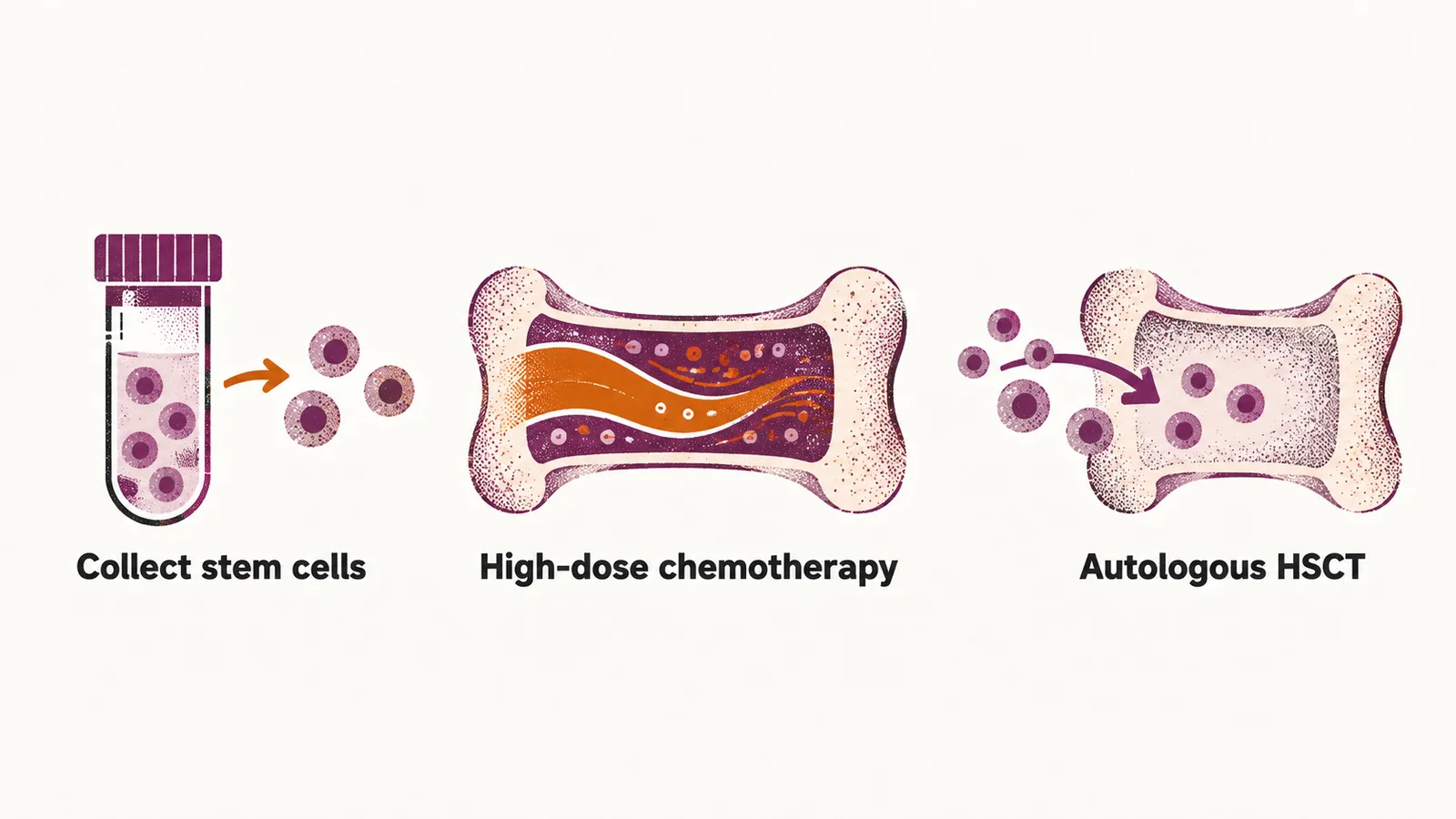
It is worth mentioning that high-dose chemotherapy is generally used only in patients with age less than 70 years, and they also have to have good physiological functioning; their social circumstances, like having a caregiver, should be taken into account before the initiation of high-dose chemotherapy treatment. Selected fit patients in their 70s may still be considered, so candidacy is decided by physiological fitness rather than by age alone.
Radiotherapy, bisphosphonates and supportive care
Radiotherapy could be curative in the case of solitary plasmocytoma, and even preventive for bone fracture in MM. Another way of prevention of bone fracture could be the use of bisphosphonates.
Beside all the main therapies of MM indicated above, other supportive care has to be considered for the patients, like the use of NSAIDs for bone pain and other drugs based on the symptoms the patient has.
Newer therapies
During the last 20 years there have been many new therapeutic approaches, like immunotherapy agents and CAR-T cell therapies, which can be used in the case of MM.