Dermatomyositis is a treatable disease, and most patients regain strength once the inflammation is controlled. What happens over the following years depends on three things: how much muscle was lost before treatment began, which antibody subset the patient has, and whether lung disease or an underlying malignancy is present.
Response to treatment
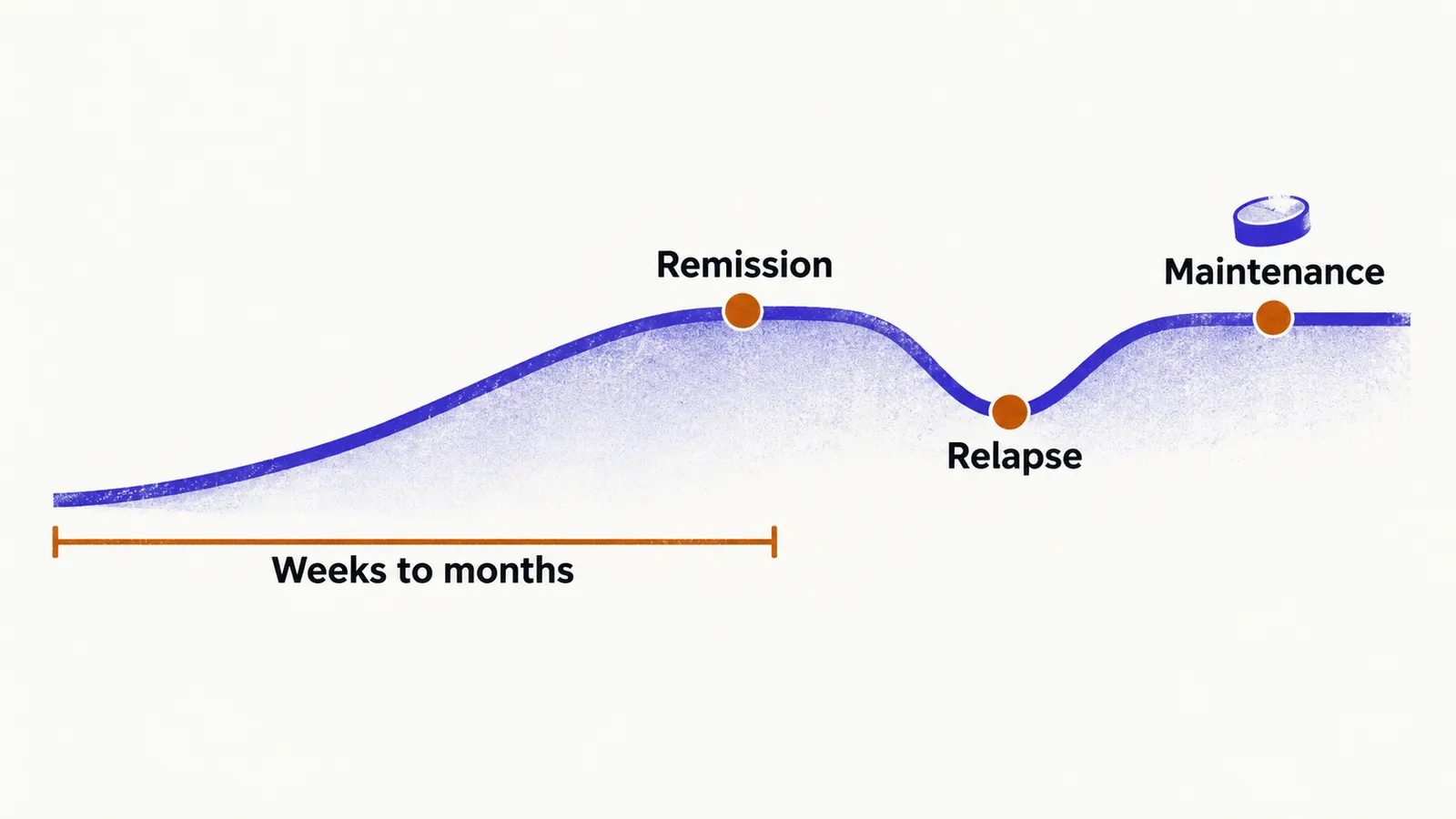
Strength and creatine kinase (a muscle enzyme that rises with fibre injury) improve over weeks to a few months, and most patients reach a state in which the disease is quiet. Fibres that atrophied before treatment do not recover fully, however, so some weakness can persist even when the inflammation has gone. Anti-Mi-2 disease predicts a good steroid response. Disease that continues despite steroids, a steroid-sparing agent, and intravenous immunoglobulin is uncommon.
Relapse after treatment is reduced
Relapse is the rule rather than the exception when treatment is withdrawn. In a cohort followed after glucocorticoid-free remission, meaning remission that persisted without steroids, most patients relapsed over the following years, which is why maintenance treatment is held long term in many patients rather than stopped once strength returns. Returning weakness, a rising creatine kinase, or a fresh rash during or after a taper signals relapse rather than a new problem.
Long-term function
Survivors often keep some limitation. Where swallowing was involved, the risk of aspiration, the entry of food or fluid into the airway, persists and needs follow-up. In juvenile dermatomyositis, calcinosis (calcium deposits in skin and soft tissue) and the contractures it can cause are the main long-term problems, and they are more common than in adults.
What determines mortality
A small number of complications drive death in dermatomyositis. Interstitial lung disease, inflammation and scarring of the lung tissue, is the most feared, and it is the reason anti-MDA5 disease is treated urgently: rapidly progressive lung involvement in that subset carries a mortality of about 50%, and the lung disease, not the weakness, is what threatens life.
Across inflammatory myopathy as a whole, the pattern is different. In a large cohort of patients with inflammatory myopathy, infection was the single most common cause of death, followed by interstitial lung disease and malignancy, with cardiac involvement a less common contributor. Malignancy is the other major driver in adult-onset disease, which is why resistance to adequate immunosuppression, or relapse after remission, reopens the search for a tumour.