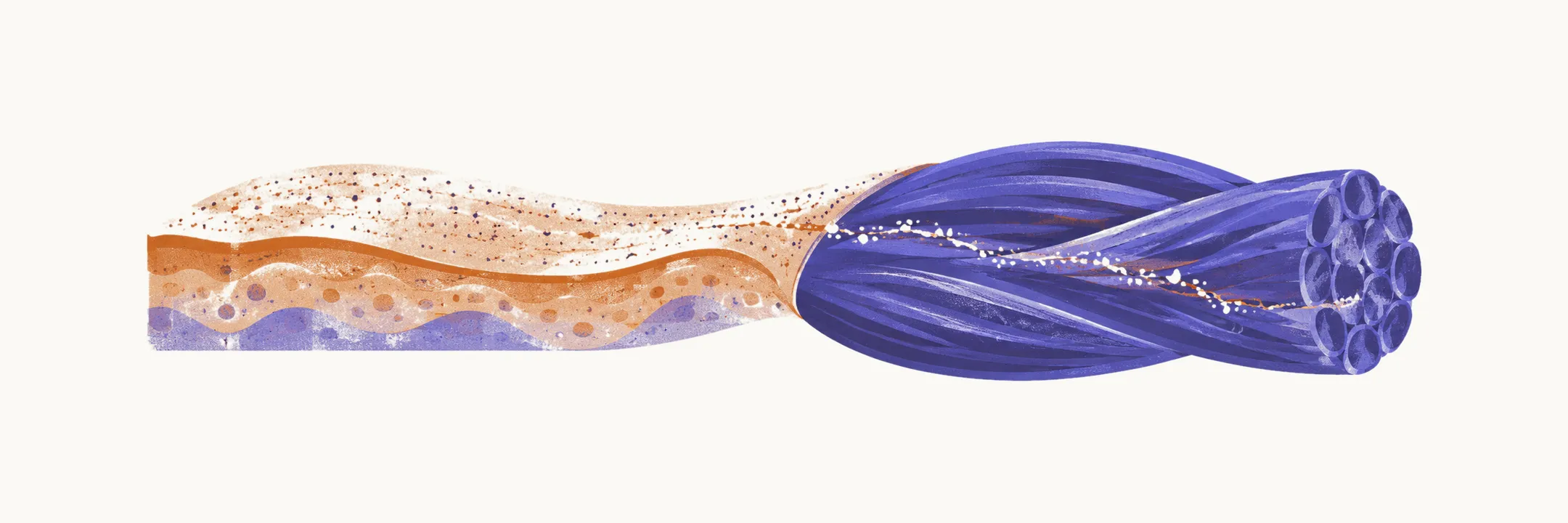
Dermatomyositis is an acquired inflammatory disease in which the immune system injures skin and skeletal muscle together. A distinctive rash and proximal muscle weakness, meaning weakness of the muscles nearest the trunk, at the hips and shoulders, are its two faces, and it is the combination of the two, rather than either one alone, that identifies the disease at the bedside.
The disease sits inside the family of inflammatory myopathies, the acquired muscle diseases in which inflammation is central. Muscle Disorders in Adults frames how adult myopathies are recognised and how they differ from junction and motor neuron mimics, Inflammatory Myopathies sets out the acquired family, its autoantibodies (antibodies directed against the body’s own proteins) and biopsy patterns, and the Polymyositis and Inclusion Body Myositis notes carry the two closest relatives in full.
Choose a route through the topic
Start with the mechanism if the disease is new to you, then the clinical presentation and the cutaneous signs, which explain each other. The differential and the diagnosis form the next pair, treatment follows, and the prognosis is the last step.
- Dermatomyositis Pathophysiology: the microangiopathy (small-vessel injury) and interferon signalling behind the weakness and the rash, and how the mechanism differs from polymyositis and inclusion body myositis.
- Dermatomyositis Clinical Presentation: who develops the disease, the pattern and tempo of the muscle weakness, and the swallowing problem that can follow it.
- Dermatomyositis Skin Manifestations: the heliotrope rash, Gottron papules and the other cutaneous signs, calcinosis, and the form of the disease that spares muscle.
- Dermatomyositis Differential Diagnosis: how dermatomyositis is told apart from polymyositis, inclusion body myositis, and other causes of proximal weakness.
- Dermatomyositis Diagnosis: muscle enzymes, the antibody subsets and what they predict, the biopsy hallmark and its limits, and the cancer screening sequence.
- Dermatomyositis Treatment: the steroid-led protocol shared with polymyositis, immunoglobulin rescue, refractory options, and malignancy co-management.
- Dermatomyositis Prognosis: what usually happens with treatment, why relapse is common when drugs are reduced, and the complications that decide long-term outcome.