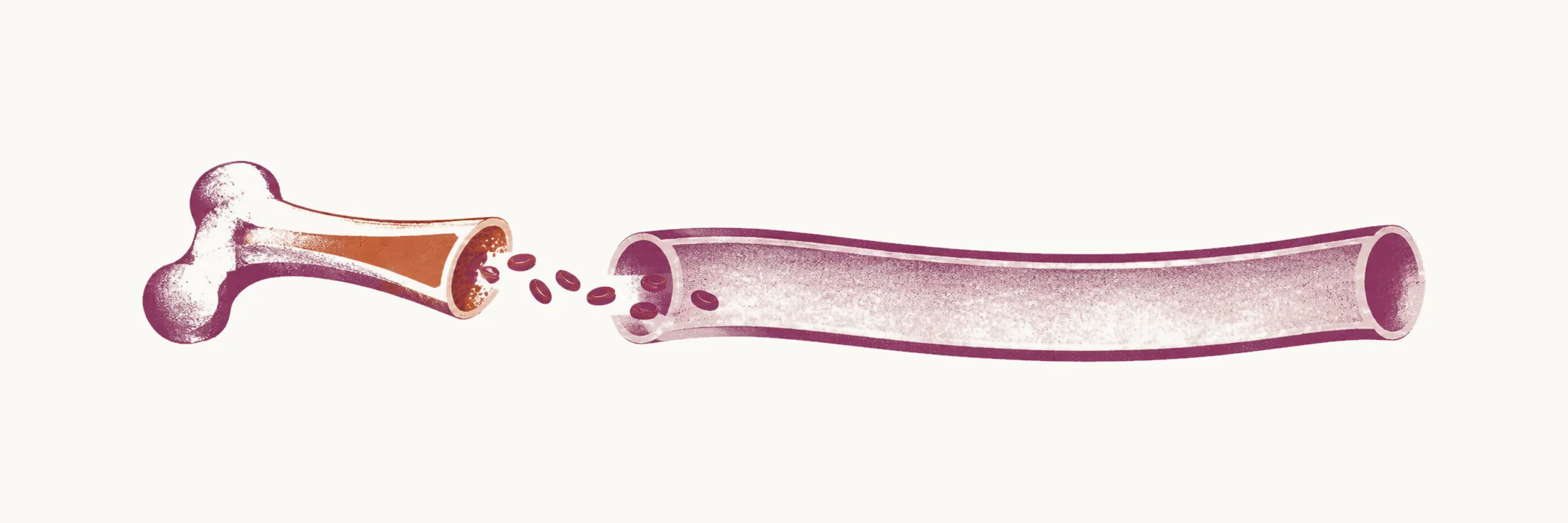
Hypoproliferative anemia is anemia in which the marrow does not increase red cell production as much as the degree of the anemia requires. The red cells are normocytic and normochromic (normal in size and in hemoglobin content), and the reticulocyte index, the reticulocyte count corrected for that degree of anemia, is inappropriately low.
The group is organized around one question: why is the marrow’s output low? The answer can be a shortage of iron, iron that is present but locked away, too little erythropoietin (EPO, the hormone from the kidney that stimulates red cell production), or a marrow that can no longer respond. The conditions included in the group are:
- early iron-deficiency anemia
- anemia of acute and chronic inflammation
- anemia of renal disease
- anemia of a hypometabolic state
- anemia after bone marrow damage
Choose a route through the topic
Two notes come first, because the rest of the topic assumes them: how red cells are produced and how the marrow’s response is read, and how iron is carried, stored and regulated.
- Red cell production and the reticulocyte count: erythropoiesis from the pro-erythroblast to the red cell, and how the reticulocyte count shows whether the marrow is responding.
- Iron transport, storage and regulation: transferrin and the transferrin receptor, uptake of iron into cells, storage in ferritin, recycling through ferroportin, and control of iron export by hepcidin and erythroferrone.
Three notes then set out the general picture of anemia and the iron supply it depends on.
- Anemia: definition, indices and classification: what anemia is, its clinical consequences and how the body compensates for them, the CBC indices that describe red cells, the MCV groups used to classify it, and the three mechanisms behind it.
- Iron supply: dietary iron and absorption: how much iron the diet supplies, how much of it is absorbed, and why the margin between what can be absorbed and what the body needs makes deficiency so common.
- The stages of iron deficiency: negative iron balance, iron-deficient erythropoiesis and iron-deficiency anemia, and the laboratory changes that mark each stage.
Three notes then take up iron-deficiency anemia itself.
- Iron-deficiency anemia: causes and clinical features: the causes of iron deficiency, the signs, the blood picture and the settings that should raise suspicion.
- Iron-deficiency anemia: laboratory diagnosis: the indices that confirm the diagnosis, their normal values, and where each of them misleads.
- Iron-deficiency anemia: treatment: oral and intravenous iron, how the response is monitored, and what to do when it does not come.
Two notes close the group, on the anemias that are not iron deficiency.
- Anemia of chronic disease and the differential diagnosis of microcytic anemia: the other causes of microcytic hypochromic anemia, and anemia of chronic disease itself, its mechanism and its treatment.
- Other hypoproliferative anemias: the anemias of renal disease, hypometabolic states and bone marrow damage, which share the low reticulocyte response but not iron deficiency.
A reader new to the topic should start with the first note and continue in the order listed, because each note builds on the ones before it.