The hypoproliferative anemias that are not due to iron deficiency share its pattern, normocytic and normochromic red cells with an inappropriately low reticulocyte count, but not its mechanism. In this group the problem is usually either that the marrow is not being stimulated or that the marrow itself can no longer respond.
Anemia of renal disease
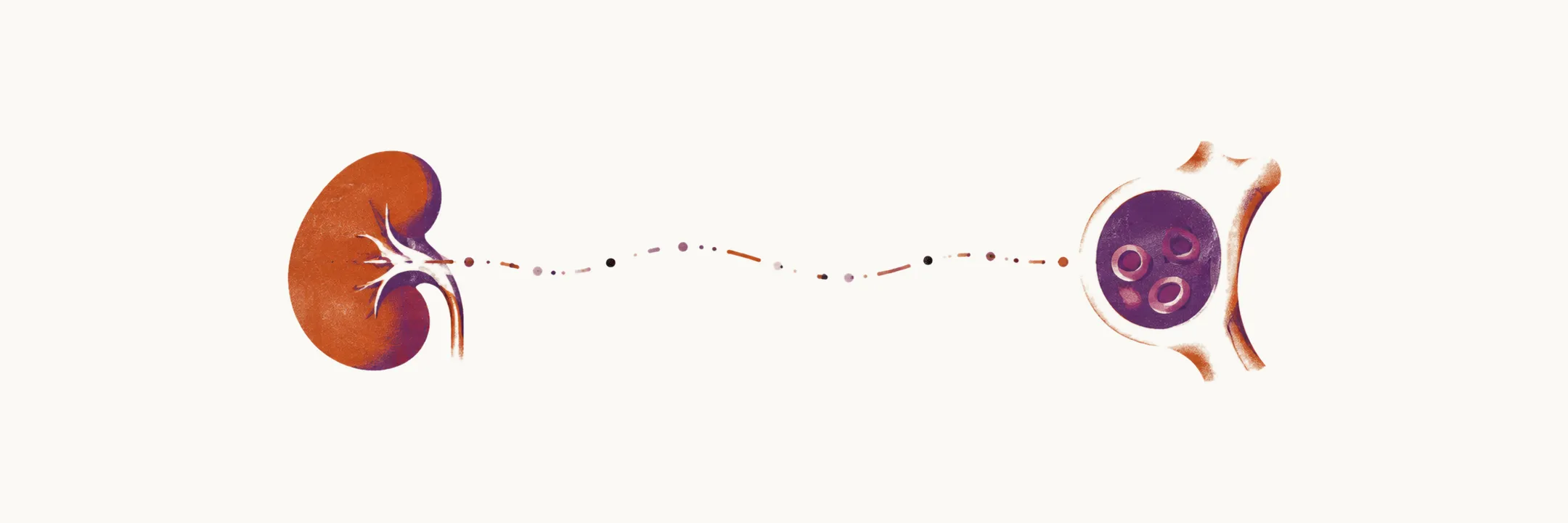
Erythropoietin (EPO) is produced by the kidney, so when renal tissue is lost the stimulus that drives red cell production falls with it. The anemia of renal disease is therefore mainly a hypoproliferative anemia from deficient EPO, and it tends to be normocytic and normochromic with a low reticulocyte count. Losing EPO also means losing erythroferrone, so hepcidin is no longer suppressed, iron is sequestered, and part of the picture is the same iron-trapping problem that is seen in anemia of chronic disease.
Other factors add to it: blood loss through dialysis and from dysfunctional platelets or angiodysplasia, resistance of the bone marrow to EPO, secondary hyperparathyroidism, and uremia shortening the survival of red cells. The severity of the anemia and the degree of renal failure do not always match: anemia occurs when creatinine clearance is below 45 mL/minute, and glomerular lesions such as amyloidosis and diabetic nephropathy generally produce the most severe anemia for the degree of renal failure.
Treatment is directed at the renal disease, and if renal function returns to normal the anemia corrects slowly. In chronic kidney disease, a recombinant erythropoiesis-stimulating agent together with adequate iron replacement increases red cell production: the iron stores have to be replete for the marrow to answer the EPO, and the aim is a hemoglobin of 10 to 11.5 g/dL, because a rise above 12 to 13 g/dL is associated with venous thromboembolism, myocardial infarction and death.
Hypometabolic states
In hypothyroidism, adrenal insufficiency, hypopituitarism and hypogonadism the metabolic rate falls, so the tissues consume less oxygen. A fall in cellular oxygen consumption can reduce the secretion of EPO, and the red cell mass falls to match the lower demand; thyroid hormone also potentiates the effect of EPO on the erythroid precursors, so its absence depresses erythropoiesis further. The anemia in these states is mild and is corrected by replacing the missing hormone. The red cell indices are variable, and hypothyroidism in particular can also give macrocytic indices.
Bone marrow damage and infiltration
Damage to the marrow removes the cells that make red cells. In aplastic anemia the hematopoietic stem cell is lost, the marrow becomes hypocellular (poor in cells), and the anemia is accompanied by a low white cell count and a low platelet count; about half of the cases are idiopathic (of unknown cause), and drugs, chemicals, radiation, hepatitis, pregnancy and some viruses are recognized causes.
The marrow can also be infiltrated, by tumor, fibrosis or granulomas, or its production can become ineffective, as in the myelodysplastic syndromes, in which the cells are made but do not mature and the picture is often macrocytic. Chemotherapy and radiotherapy damage it directly.
Anemia of cancer
Cancer causes anemia in more than one way: the inflammation of the tumor acts like anemia of chronic disease, the marrow can be infiltrated by the tumor or damaged by its treatment, and the response to EPO can be inadequate. This is why the anemia of cancer belongs with the anemias that fail through an inadequate response of the marrow to EPO rather than with iron deficiency.
How these anemias are recognized
They are recognized from the normocytic, normochromic picture with a reticulocyte count that is too low for the degree of the anemia, together with the clinical setting: renal failure, an endocrine or chronic inflammatory disease, or a marrow that also produces too few white cells and platelets, which is the clue that the problem is in the marrow and not in the iron. Where the cause remains unclear, the bone marrow is examined.