
A microcytic hypochromic anemia is not always caused by iron deficiency, and the differential diagnosis matters because the treatments differ. The main alternative in practice is anemia of chronic disease, which produces a similar picture through inflammation even though the iron in the body is not low.
Differential diagnosis of microcytic hypochromic anemia
Iron-deficiency anemia is the reference point, and three other forms of anemia have to be considered against it. In thalassemia, opposed to iron-deficiency anemia, the serum iron and the transferrin saturation are normal or increased. Anemia of inflammation is usually normocytic and normochromic, and its serum ferritin is normal or increased; separating it from true iron deficiency is hard for the clinician most of the time. In myelodysplastic syndrome the patient has impaired hemoglobin synthesis, with mitochondrial dysfunction that leads to impaired incorporation of iron into the heme, while the iron values in the body seem normal.
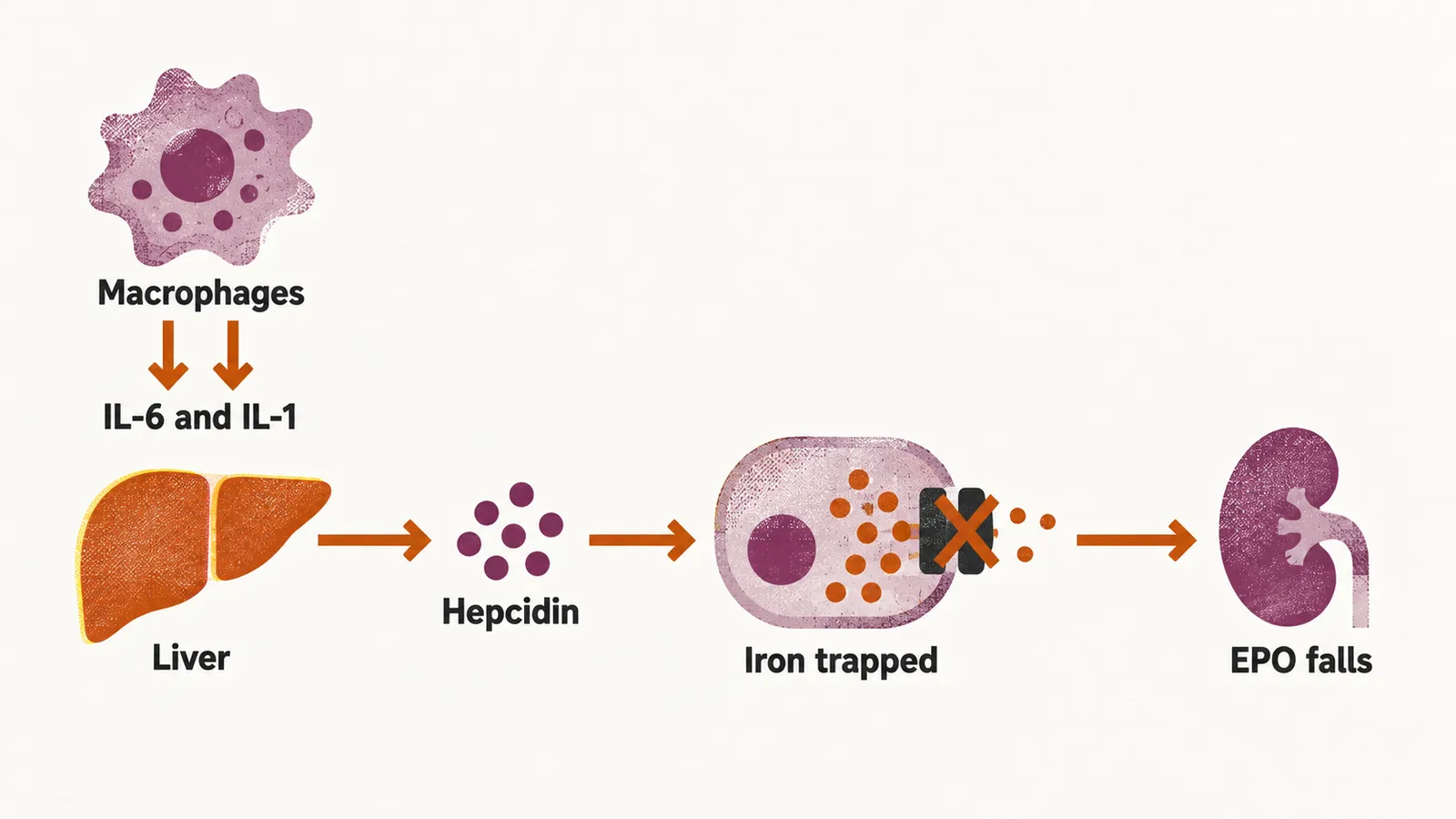
Anemia of inflammation is the form that looks like iron deficiency on the iron studies even though the iron in the body is not low, which raises the question of how inflammation traps iron.
Anemia of chronic disease
The second most common form of anemia is anemia of chronic disease, or ACD. It is mostly normocytic and normochromic, and it can become microcytic when it is severe. It occurs with:
- infectious diseases
- neoplastic disorders
- chronic inflammatory disorders
The mechanism of anemia of chronic disease
In chronic disease, macrophages are activated and produce IL-6 and IL-1. These cytokines act on the liver, which makes more hepcidin; hepcidin decreases the transport of iron in the body and also decreases the absorption of iron from the dietary intake. The iron in the body is therefore trapped inside the reticuloendothelial cells and cannot be used in hemoglobin synthesis, even though the total amount of iron is not low. The increase of pro-inflammatory cytokines has two further effects: it reduces erythropoiesis in the bone marrow, and it lowers the production of EPO (erythropoietin) by the kidney. Anemia of inflammation is thus a disorder of iron handling first, which is what makes it look like iron deficiency on the iron studies.
Telling it from iron deficiency
Ferritin is an acute-phase reactant, a protein whose level rises in inflammation, so it can be raised in inflammation even when the iron stores are low. A serum ferritin below 100 microgram/L in a patient with inflammation therefore suggests that iron deficiency may be superimposed on the anemia of chronic disease. The hemoglobin is usually above 8 g/dL unless a second mechanism contributes.
Treatment
The real cure of anemia of chronic disease is the cure of the underlying disease. Iron supplements help only when true iron deficiency is also present, and they are avoided in acute, uncontrolled infection and in inflammation without iron deficiency, because the iron is not available to the marrow. Erythropoiesis-stimulating agents are used in selected patients, such as those with chronic kidney disease and some with chemotherapy-induced anemia.