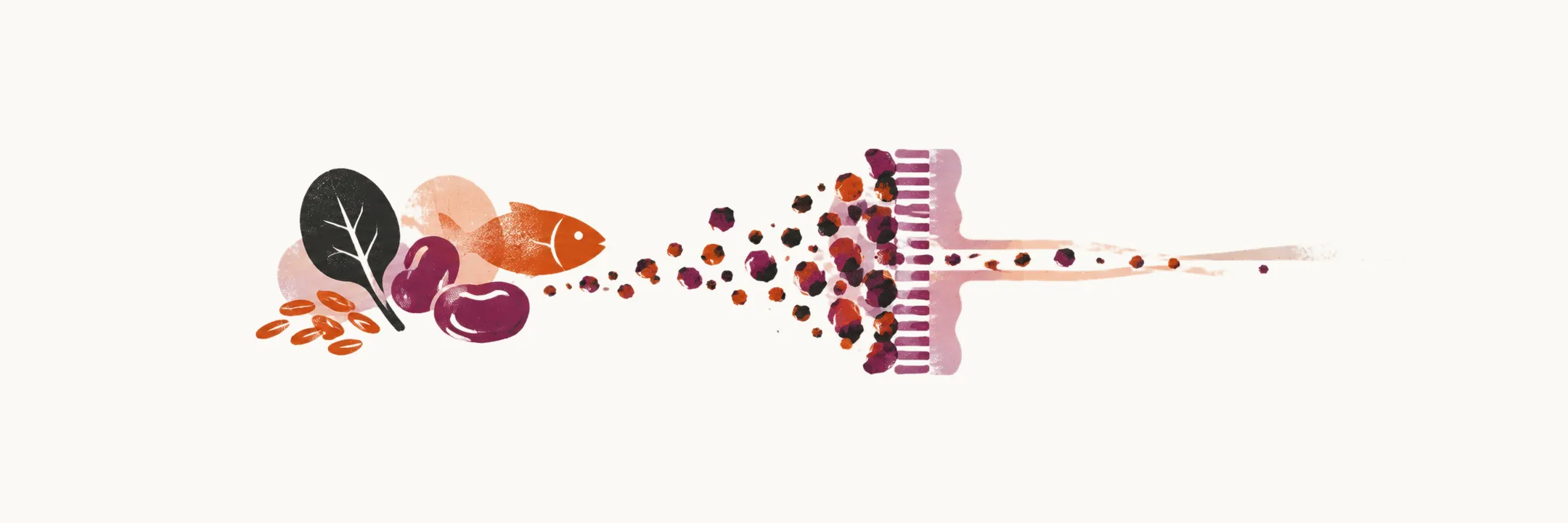
Most of the iron the body uses is recovered from red cells that have been destroyed, and the remainder has to come from the diet. Without iron, the erythroid cells cannot produce enough hemoglobin, so a shortage of iron produces anemia. How much iron the diet supplies, and how much of it the gut can absorb, set the balance that iron deficiency disturbs.
Dietary iron content
The iron content of the diet depends above all on the total caloric intake: on average, 6 mg of elemental iron per 1000 calories. The iron that has to be absorbed from the diet to replace the losses of iron from the body is about 10% of the body’s iron content in a year in men, and about 15% in women of childbearing age.
Intake and absorption
In the United States the average daily intake of iron is about 15 mg/day in men, of which 6% is absorbed, and about 11 mg/day in women, of which 12% is absorbed. The average absorption is therefore about 6 to 12%. In iron deficiency the level of hepcidin, the hormone that blocks iron export from cells, is low, which is why absorption of iron from food is then at its highest: it can rise to 20% from meat-containing food and to 5-10% from vegetarian food.
Absorption depends heavily on the form the iron is in and on what is eaten with it. Some general rules apply:
- absorption is highest when iron is taken without food in the gastrointestinal tract
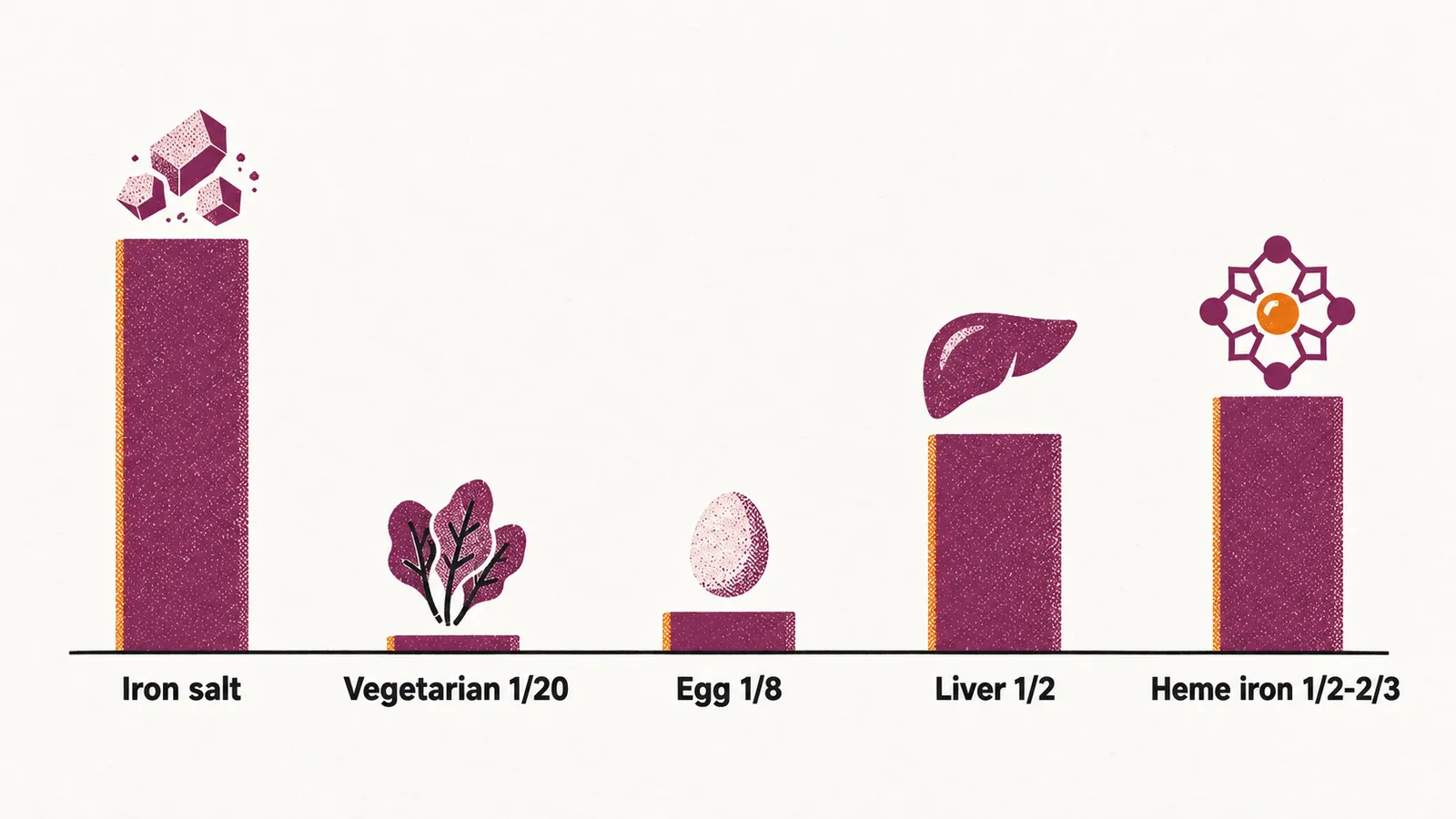
- vegetarian food is absorbed at about 1/20 of a similar amount of an iron salt
- egg at about 1/8 of a similar amount of an iron salt
- liver at about 1/2 of a similar amount of an iron salt
- heme iron at about 1/2 to 2/3 of a similar amount of an iron salt
The narrow margin between absorption and need
The margin between the iron available for absorption and the iron needed by infants and by women is very narrow, which is why iron-deficiency anemia is so common worldwide: it is estimated to affect about one billion people around the world. Globally, about 50% of anemia is attributed to iron deficiency. When the iron lost or needed exceeds what the gut can absorb, the stores begin to fall, and that sequence is what the stages of iron deficiency describe.