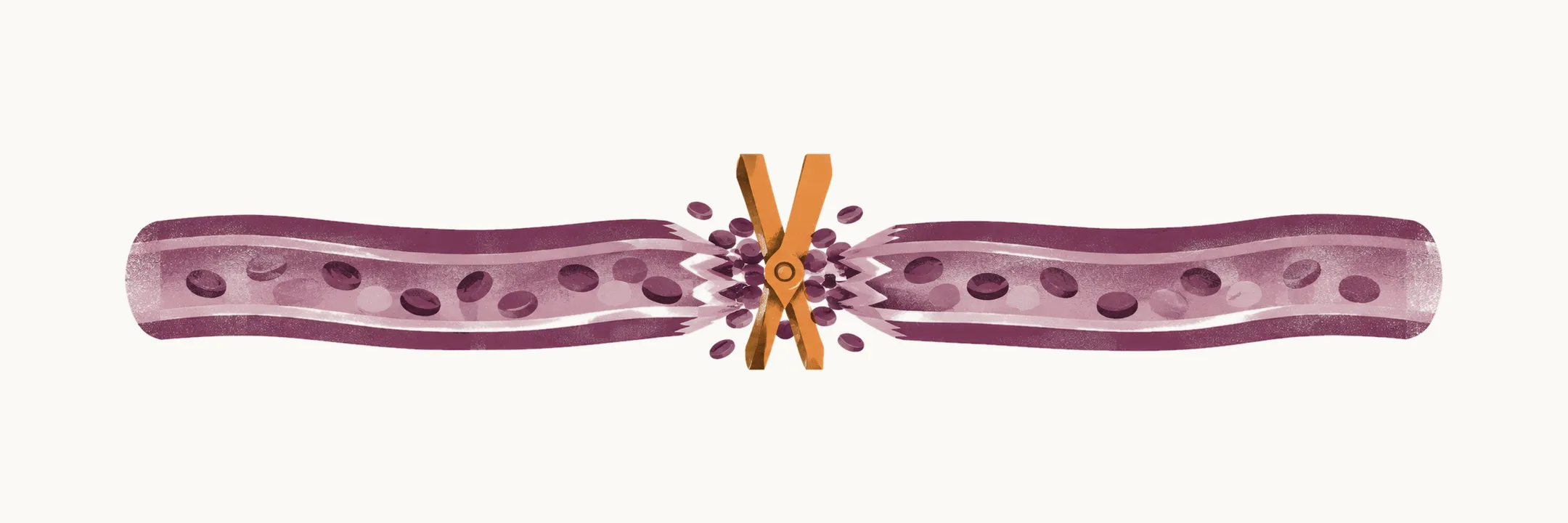
A patient who is actively bleeding is managed differently from one who is not: the source of the bleeding has to be found and hemostasis supported while the cause is investigated. The very first step is to search for an anatomical or surgical lesion responsible for the active bleeding, together with laboratory testing for its cause.
Supportive measures follow, chosen to match the component that is deficient. They are platelet transfusion, fibrinogen or vitamin K, clotting factor products, and antifibrinolytic agents:
- Transfusion of platelets. In actively bleeding patients with thrombocytopenia, platelets are transfused to reach at least 50,000 per microliter, and at least 100,000 per microliter for CNS bleeding or a closed compartment, because bleeding into those spaces is far less forgiving. Platelets are also transfused when abnormally functioning platelets are suspected, such as in patients with uremia or diabetes mellitus, or patients taking antiplatelet drugs. Three disorders can be exacerbated by the transfusion of platelets — thrombotic thrombocytopenic purpura (TTP), disseminated intravascular coagulation (DIC) and heparin-induced thrombocytopenia (HIT) — so platelets are given in them only when bleeding demands it.
- Transfusion of fibrinogen or vitamin K. In patients with active bleeding and a prolonged prothrombin time (PT) and activated partial thromboplastin time (aPTT), there may be a deficiency of vitamin K, factor II, V or X, or fibrinogen. The distinction is made with the thrombin time: it is normal in deficiency of factor II, V and X, but prolonged in deficiency of fibrinogen. In actively bleeding patients, the concentration of fibrinogen should be kept over 100 mg/dl, and over 200 mg/dl in pregnant women.
- Clotting factor products. The main clotting factor products used in patients with active bleeding are prothrombin complex concentrate, or PCC, and recombinant activated factor VII, or rFVIIa; they are mostly used for active bleeding caused by warfarin use, and in very severe bleeding.
- Antifibrinolytic agents. The major antifibrinolytic agents used in the clinic for patients with active bleeding and congenital bleeding disorders with mucosal bleeding are ε-aminocaproic acid, or EACA, and tranexamic acid.