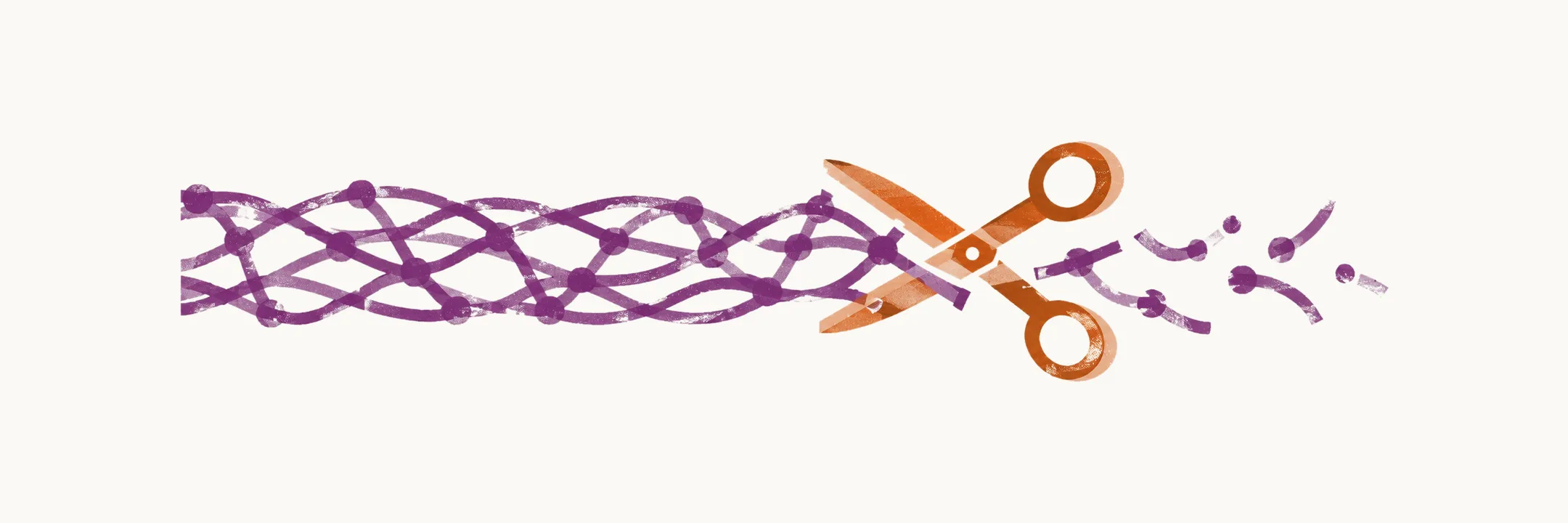
Once a clot has sealed a wound it has to be removed, or it would narrow or block the vessel. The fibrinolytic system dissolves the fibrin clot, and it is controlled mainly by plasmin, the major protease of the system.
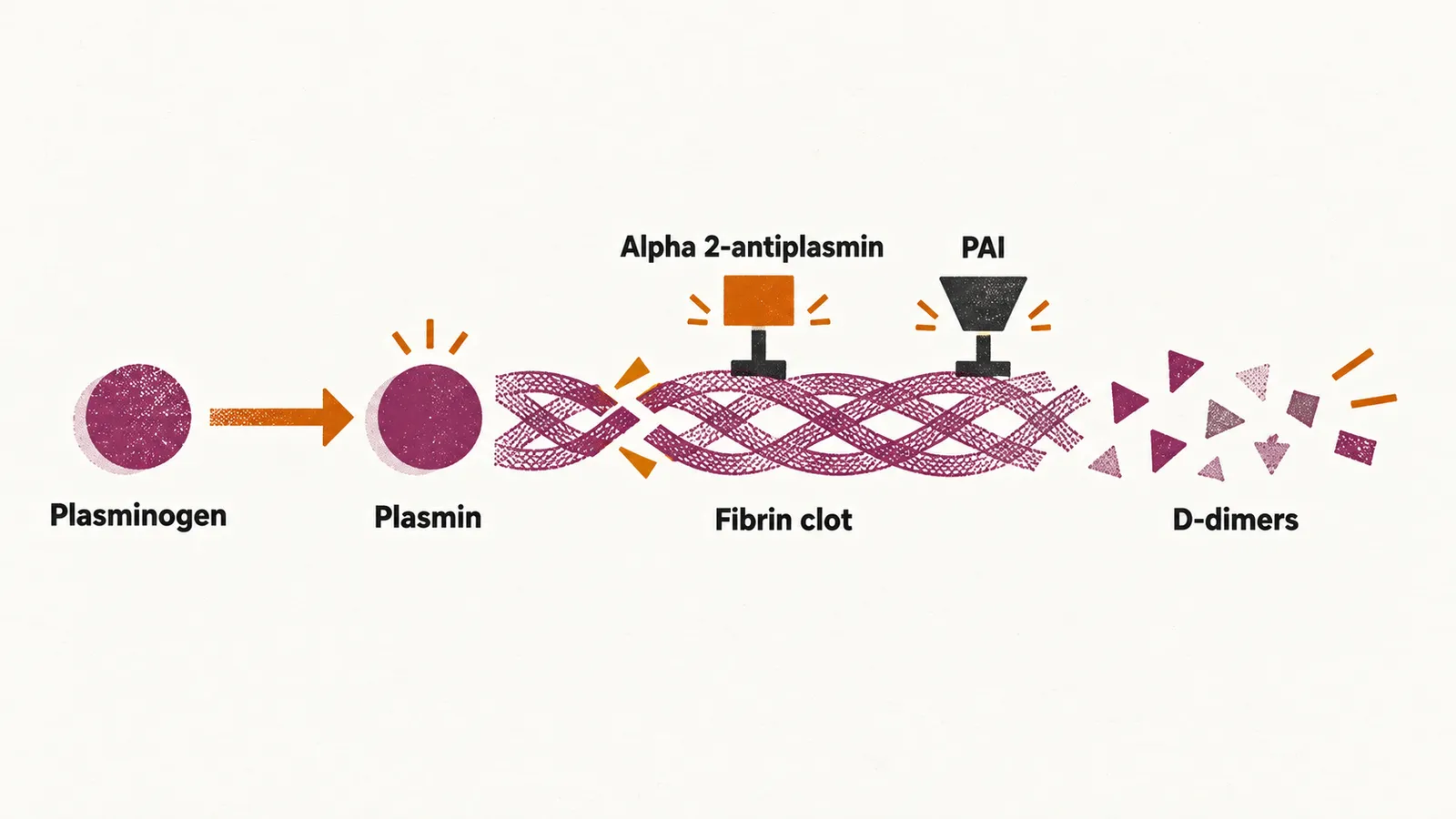
Plasmin is not stored ready-made; it is formed on demand from its inactive precursor, plasminogen. The conversion is done by tissue plasminogen activator (tPA) or urokinase plasminogen activator (uPA), which cleave the Arg560-Val561 bond to make the activated form, plasmin. Both plasminogen and plasmin contain lysine-binding sites, which make them specific to the clot and not to other regions.
Fibrinolysis accelerates itself. The partial degradation of the fibrin clot by plasmin exposes more and more plasminogen- and tPA-binding sites, so as time passes the process of fibrinolysis speeds up. During the digestion of the clot, some parts of the fibrin are released into the circulation; these are the D-dimers, and because they appear only when fibrin has been both formed and degraded, they are used to screen for that combination.
The physiological regulation of fibrinolysis is under the control of:
- α2-antiplasmin, which is the main inhibitor of plasmin; it is mainly responsible for the inactivation of any non-fibrin-clot-associated plasmin in the body.
- plasmin-activation inhibitor, or PAI, which is made by the endothelial cells.
- thrombin-activatable fibrinolysis inhibitor, or TAFI, which cleaves the C-terminal lysine residues of the fibrin clot that are important for the localisation of plasmin activity.
When fibrinolysis-related disorders disturb this balance, they cause delayed bleeding after trauma or surgery, and recognising bleeding of that kind at the bedside starts with the words used to name it.