Bleeding is named by the size of the lesion and the layer of tissue it occupies, and those names carry diagnostic weight. The same underlying disorder looks different depending on whether blood leaks from capillaries into the skin or collects in a closed space, so the vocabulary is the first step in reading a bleeding problem.
- Petechiae are small, flat, red, discrete areas of skin bleeding, typically smaller than 2 mm in diameter. They are mostly seen in severe thrombocytopenia, a very low platelet count, or with prolonged use of glucocorticoids.
- Purpura is made by petechiae coming together, and it is smaller than 1 cm in diameter. There is wet and dry purpura: the former is related to the mucosa and the latter to cutaneous areas.
- Bruise, or ecchymosis, is a subcutaneous accumulation of extravasated blood, bigger than 1 cm in diameter. It is made by the formation of previous purpura in the skin.
- Hematoma is a collection of blood in extravascular areas. It is followed by pain, a drop in hemoglobin, and also the presence of fluid on medical imaging.
- Major bleeding is related to severe bleeding which can result in death, such as bleeding in the brain or in big joints; it leads to a fall in hemoglobin of 2 g/dL or more, and it needs two or more transfusions of red blood cells (RBCs) to recover.
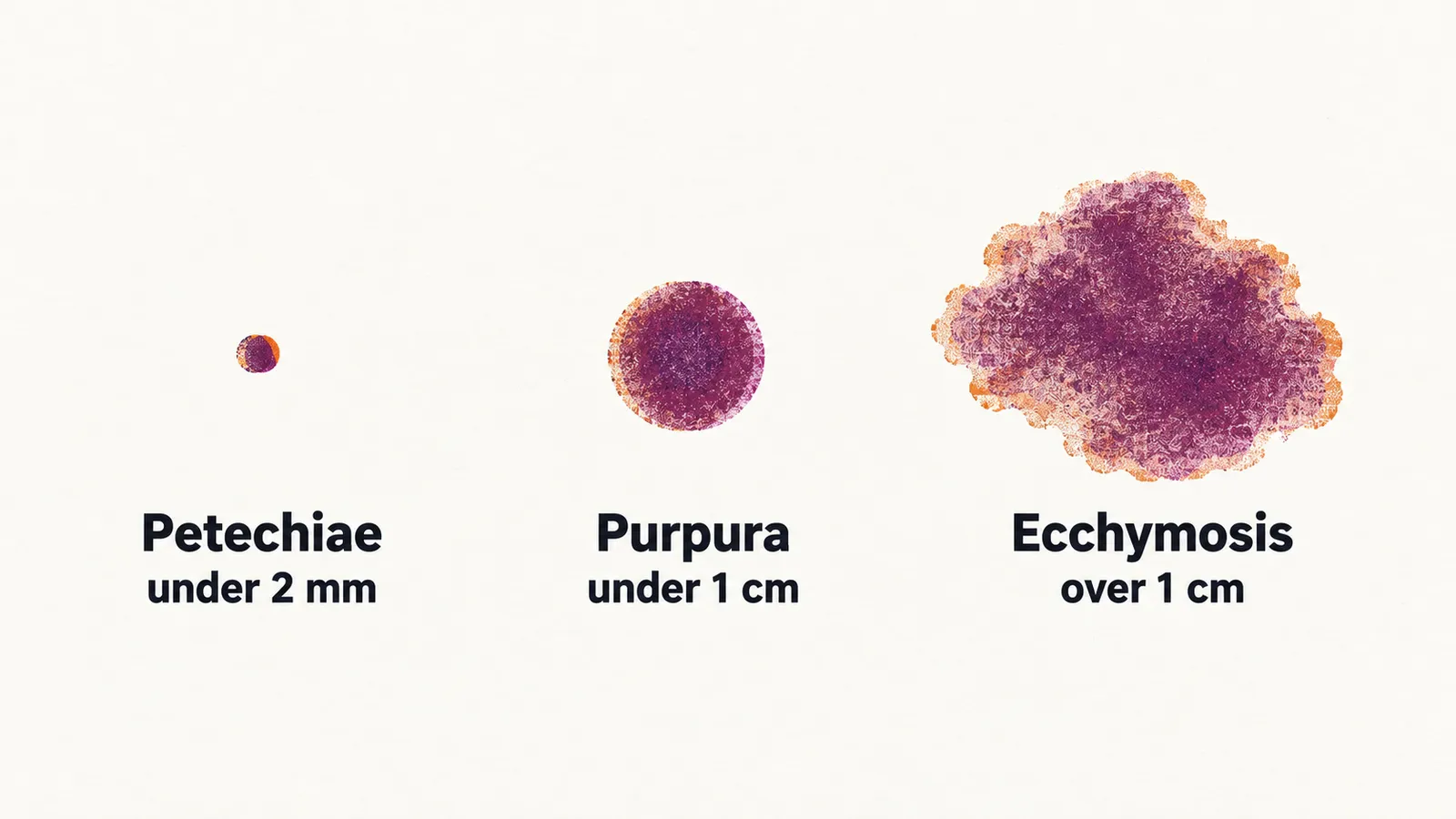
The size and layer are what separate capillary from vessel bleeding. Petechiae and purpura come from leaking capillaries and point toward platelet or capillary defects, while hematoma and joint bleeding reflect a defect in fibrin formation, which is the work of secondary hemostasis. The words direct the examination before any test is ordered.