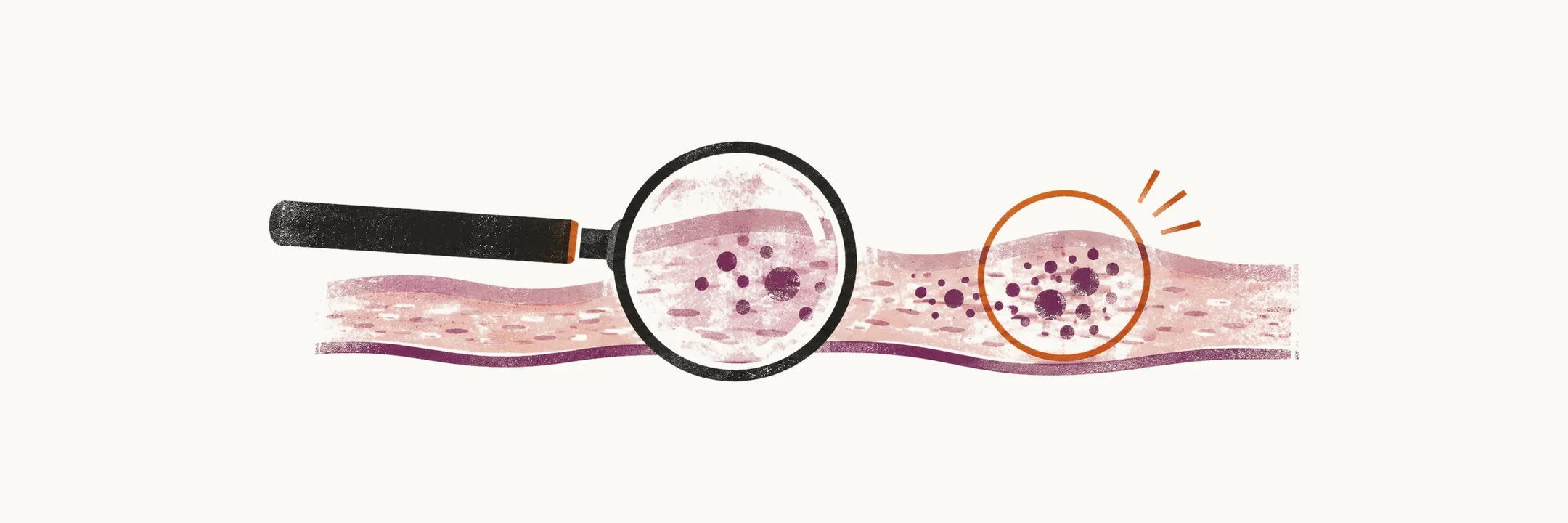
Bleeding leaves recognisable marks, and their size and distribution carry information about the disorder behind them. The skin lesions are named by size: petechiae are small red spots under 2 mm, purpura are lesions under 1 cm, and ecchymoses, or bruises, are larger than 1 cm; Bleeding Terminology defines these and related terms in full. The findings below are what the examination adds, and several of them point to a specific diagnosis.
Cutaneous findings
The distribution of bleeding into the skin is the most informative part of the examination, and it is read by where the lesions sit.
Petechiae, especially in the legs and sacrum, can be a good sign of thrombocytopenia, a low platelet count. Petechiae, purpura and ecchymoses in the arm are mostly related to aging and, to a lesser extent, are considered a sign of bleeding disorders. Telangiectasias around the lip or fingertip can be a sign of hereditary hemorrhagic telangiectasia, or HHT.
Bruises also carry a message through their location: bruises in the reachable areas of the body may indicate self-harm, and in non-reachable areas they may indicate abuse. A different kind of skin sign, perifollicular hemorrhage, can be a sign of scurvy, or a low level of vitamin C in the blood.
Other findings
Findings away from the skin point to a systemic cause of bleeding.
Splenomegaly, an enlarged spleen, can be a sign of liver diseases, which include spider angiomata, jaundice and gynecomastia, or of lymphoma or other myeloproliferative disorders, with pallor and lymphadenopathy. Joint and skin hypermobility is the sign of Ehlers-Danlos syndrome, or EDS, which can lead to rupture of the vascular bed and bleeding.
Cardiac findings can take the form of a very harsh murmur due to aortic stenosis in a form of acquired VWD, the acquired form of von Willebrand disease. Macroglossia and organ infiltration, such as carpal tunnel syndrome, can be a sign of amyloidosis, which can lead to several different acquired bleeding disorders, such as factor X, α2-antiplasmin and VWF.
These findings only raise suspicion. Whether a bleeding disorder is present, and which part of hemostasis is at fault, is then judged by laboratory testing.