
Chemotherapy-induced peripheral neuropathy grows more important as chemotherapy use grows. It is usually a distal, symmetric, sensory-predominant neuropathy that starts in the feet, and it is often the toxicity that limits how much treatment a patient can receive.
Which drugs cause it
Several drug classes cause the neuropathy, each with its own mechanism and typical pattern.
| Drug group | Mechanism | Typical pattern |
|---|---|---|
| Vinca alkaloids, such as vincristine | disrupt microtubules in the axon | distal sensory loss in roughly a third of patients, often easing between cycles |
| Platinum drugs, such as oxaliplatin and cisplatin | accumulate in dorsal root ganglia (sensory nerve cell bodies beside the spinal cord) | cumulative sensory loss that can worsen after treatment stops |
| Taxanes, such as paclitaxel | disrupt microtubule function | distal sensory loss, cumulative with dose |
| Bortezomib | proteasome inhibition | sensory, sometimes painful |
| Thalidomide | several effects, including antiangiogenic | sensory, often with a large-fibre element |
Neuropathy develops in roughly 40 to 50% of patients treated with oxaliplatin and around 60% of those given paclitaxel, with severe neuropathy in a small minority.
One interaction is worth anticipating: patients with demyelinating Charcot-Marie-Tooth disease may develop a severe neuropathy from vincristine, which should not be given to them, as described under hereditary neuropathies.
Presentation
Numbness and tingling in the feet come first, then the hands in a glove-and-stocking pattern. Pain may be burning, shooting, or electric, and it is often worse at night. Fine hand function suffers early, so patients notice difficulty with buttons, writing, or holding small objects before they notice weakness. Muscle power is usually only mildly affected, and prominent weakness suggests an alternative cause. Autonomic features are uncommon.
Sensitivity to cold and to light touch is common, and oxaliplatin produces an acute, transient cold-triggered allodynia (pain from a normally painless stimulus) in the days after an infusion that is separate from the cumulative neuropathy.
The coasting effect
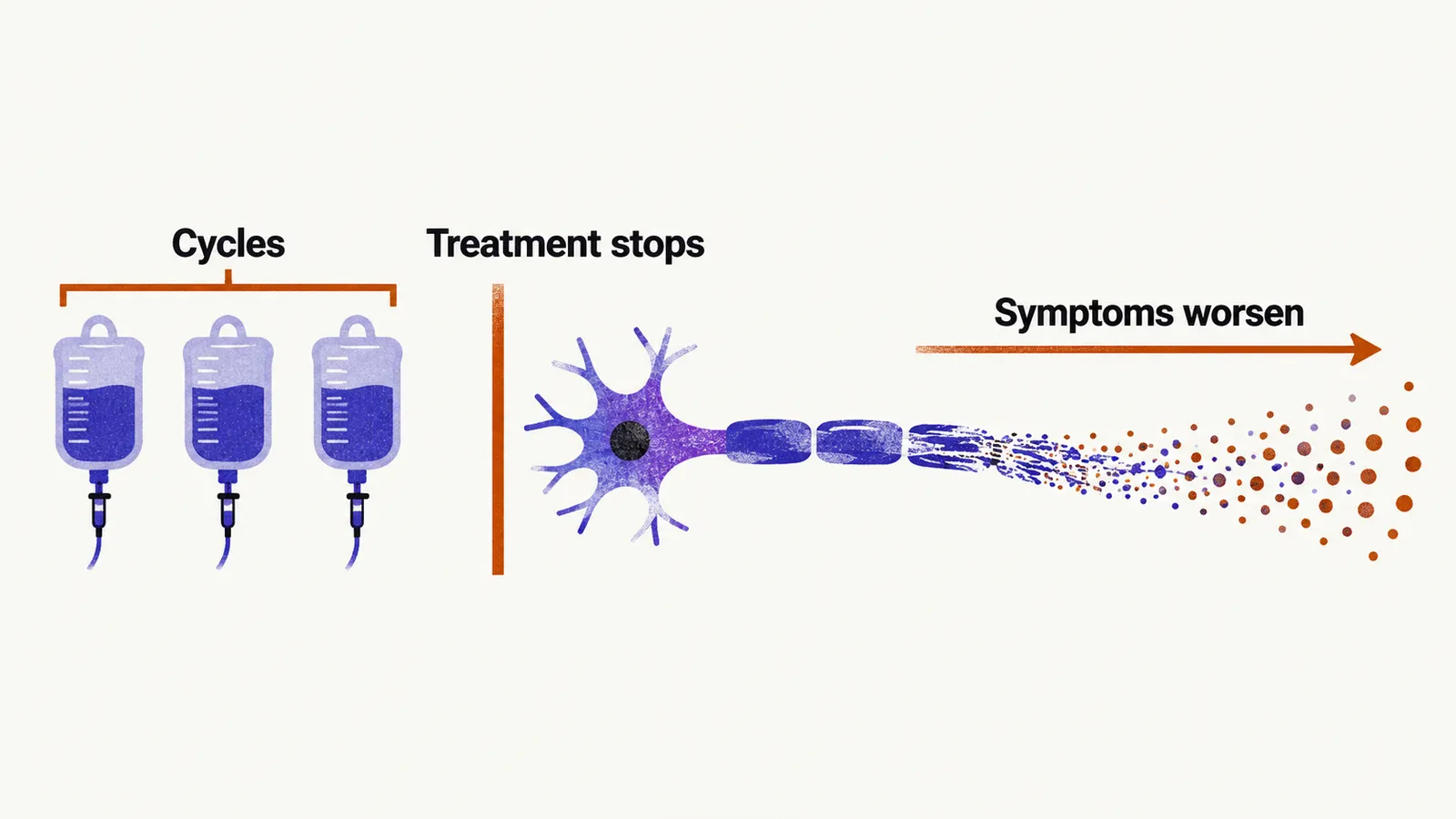
Platinum drugs accumulate in the dorsal root ganglia and cause cumulative damage that can keep worsening after treatment stops. New or deteriorating symptoms in the weeks after the last cycle, and occasionally symptoms surfacing years later, are part of this coasting effect rather than evidence of a new disease. Because the damage continues after the drug is withdrawn, the decisions made during treatment carry more weight than any rescue therapy given afterwards.
Prevention
No proven pharmacological prevention exists. The most effective intervention is dose reduction or a schedule change, which matters more because of the coasting effect. Calcium and magnesium infusions have mixed evidence in oxaliplatin injury, and agents such as acetyl-L-carnitine remain investigational. Prevention therefore depends on serial symptom assessment during treatment and on early discussion with the oncology team when neuropathy becomes functionally limiting.
Management of established neuropathy
Duloxetine is the only drug with supporting evidence for painful chemotherapy-induced neuropathy, and its benefit is modest; the rest of the approach follows the general principles for neuropathic pain, described under neuropathic pain. Numbness itself does not respond to these drugs, and no treatment reliably reverses established loss.
Rehabilitation carries the practical load: balance training, orthotics or an ankle-foot orthosis for foot drop, gait aids, and occupational support for hand function. Fall prevention matters because impaired position sense and pain loss combine to make balance and unnoticed foot injury common.
Vincristine-induced neuropathy usually improves after the drug is stopped. Platinum-induced damage improves slowly and may leave persistent deficits, and progression can continue for weeks or months after the final dose.
Because prominent weakness suggests an alternative cause, deciding whether a drug explains a neuropathy rests on the history, examination, and testing used for any neuropathy.