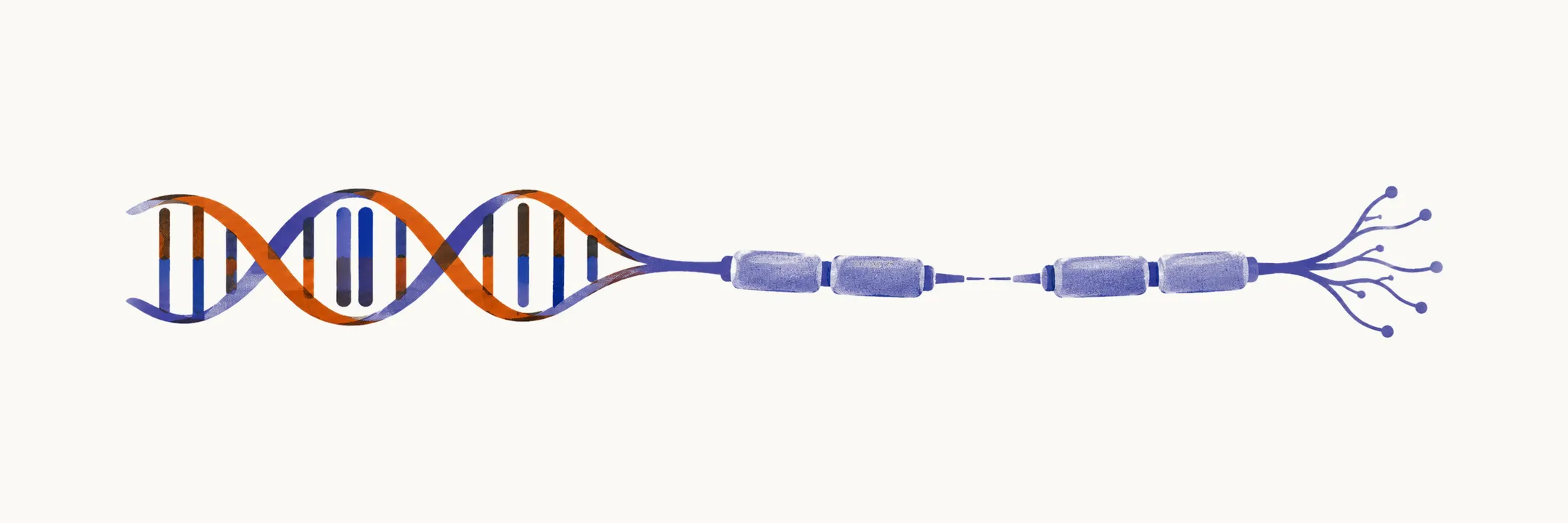
Inherited neuropathies are an important explanation for a slowly progressive, symmetric neuropathy in someone with no diabetes, no alcohol exposure, and no toxic history. Recognizing them early stops unnecessary immunotherapy, guides genetic counseling, and in one group changes treatment.
Charcot-Marie-Tooth disease
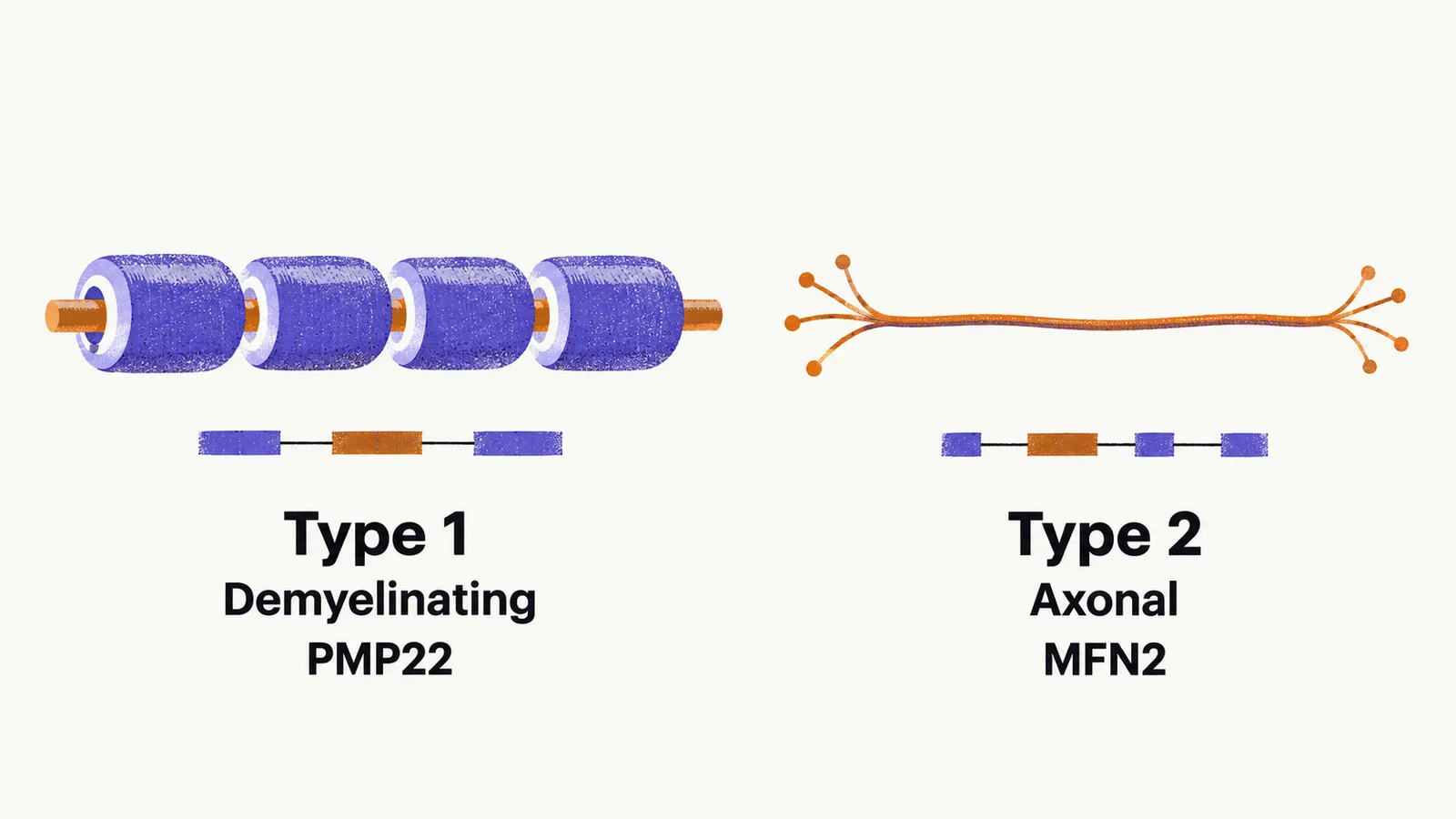
Charcot-Marie-Tooth disease (CMT) is the most common inherited neuropathy and the hereditary reference point for the whole topic. It is a group of conditions rather than one disease. Type 1 is demyelinating, and most cases come from a PMP22 duplication on chromosome 17. Type 2 is axonal, with mitofusin-2 (MFN2) among the genes involved. X-linked disease comes from connexin-32 (GJB1) mutations and often affects males more severely. Around 40 to 50% of all CMT is CMT1A, the PMP22 duplication.
The classic picture is a long-standing, slowly progressive, distal, symmetric sensorimotor neuropathy: pes cavus with hammer toes, thin calves below preserved thighs, absent ankle jerks, and distal weakness that produces foot drop and a steppage gait. Onset is usually in childhood or adolescence, and progression is slow enough that many patients cannot date the beginning of their symptoms. Sensory loss is mild relative to the weakness.
Diagnosing inherited neuropathy
Family history and examination carry most of the diagnosis, and a family history of foot deformity, orthotics, or unexplained clumsiness counts even when no one has a neurological label. Nerve conduction studies then separate the two broad types: uniform, marked slowing across all segments suggests a demyelinating inherited process, whereas patchy slowing with conduction block suggests an acquired inflammatory one. Genetic testing confirms the diagnosis, and nerve biopsy is no longer needed for it.
The practical trap is mistaking CMT for an acquired treatable disease. When a symmetric demyelinating neuropathy progresses slowly and the family history is positive, immunotherapy has nothing to offer, and the workup should shift to genetic testing rather than to further trials of treatment.
Hereditary neuropathy with liability to pressure palsies
Hereditary neuropathy with liability to pressure palsies (HNPP) is the inherited mimic of focal and stepwise nerve disease. It is caused by a deletion of PMP22, the reciprocal change to the duplication that causes CMT1A, and its prevalence is about 7 to 16 people per 100,000. Ordinary minor pressure or minor trauma produces recurrent focal palsies: an arm that was slept on awkwardly, a leg crossed for too long, or prolonged pressure over a nerve. Episodes usually recover over weeks to months, and conduction studies show mild background slowing with increased susceptibility to compression at entrapment sites.
Unlike inflammatory causes, it does not respond to immunotherapy, so management is avoidance of sustained pressure and nerve compression, with splinting during recovery and genetic confirmation when the pattern fits.
Transthyretin amyloid neuropathy
Familial amyloid polyneuropathy comes from mutations in the transthyretin (TTR) gene, which deposit misfolded protein in peripheral nerves. The result is a progressive, length-dependent sensorimotor neuropathy that is small-fibre predominant, with early loss of pain and temperature sensation and autonomic failure such as orthostatic hypotension and disturbed bowel function, alongside cardiac and ocular involvement that drives much of the prognosis.
Diagnosis rests on genetic testing supported by tissue biopsy showing amyloid, with cardiac assessment alongside. Treatment has changed substantially and is one of the few areas of this topic with disease-modifying options: liver transplantation was the historical approach, and current options include TTR stabilizers, gene-silencing therapies, and antisense oligonucleotides. Expert guidance recommends starting disease-modifying treatment as soon as the diagnosis is established rather than waiting for progression, and inotersen requires monitoring for thrombocytopenia (low platelet count) and glomerulonephritis (inflammation of the kidney filters).
Treatment of inherited neuropathy
For CMT and HNPP no disease-modifying therapy exists. Care is supportive: physiotherapy, orthotics and ankle-foot orthoses for foot drop and unstable ankles, occupational therapy, tendon transfer or foot surgery for troublesome deformity, and monitoring of gait and falls. Genetic counseling follows any confirmed diagnosis, since these are inherited conditions with implications for relatives.
The one intervention to remember is avoidance of neurotoxic drugs in demyelinating CMT, because vincristine can precipitate a severe, sometimes irreversible neuropathy in CMT1 and should not be given; paclitaxel is suspected of the same effect.