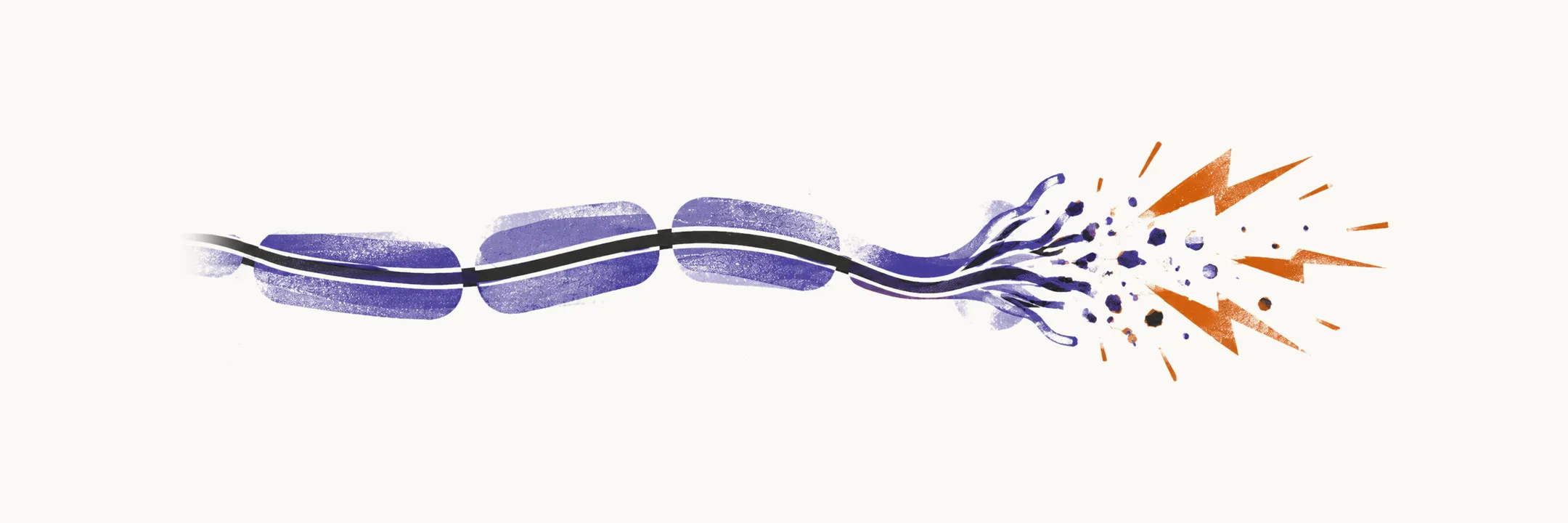
Neuropathic pain comes from damaged or dysfunctional somatosensory pathways, the pathways that carry touch, pain, and temperature signals, and does not answer to ordinary analgesics the way nociceptive pain, which arises from tissue injury, does. Damaged fibres fire spontaneously, sodium channels redistribute along the axon, and the central pathways that would normally damp the signal become less effective, so the pain persists without the ongoing tissue injury that nociceptive pain signals.
First-line drugs
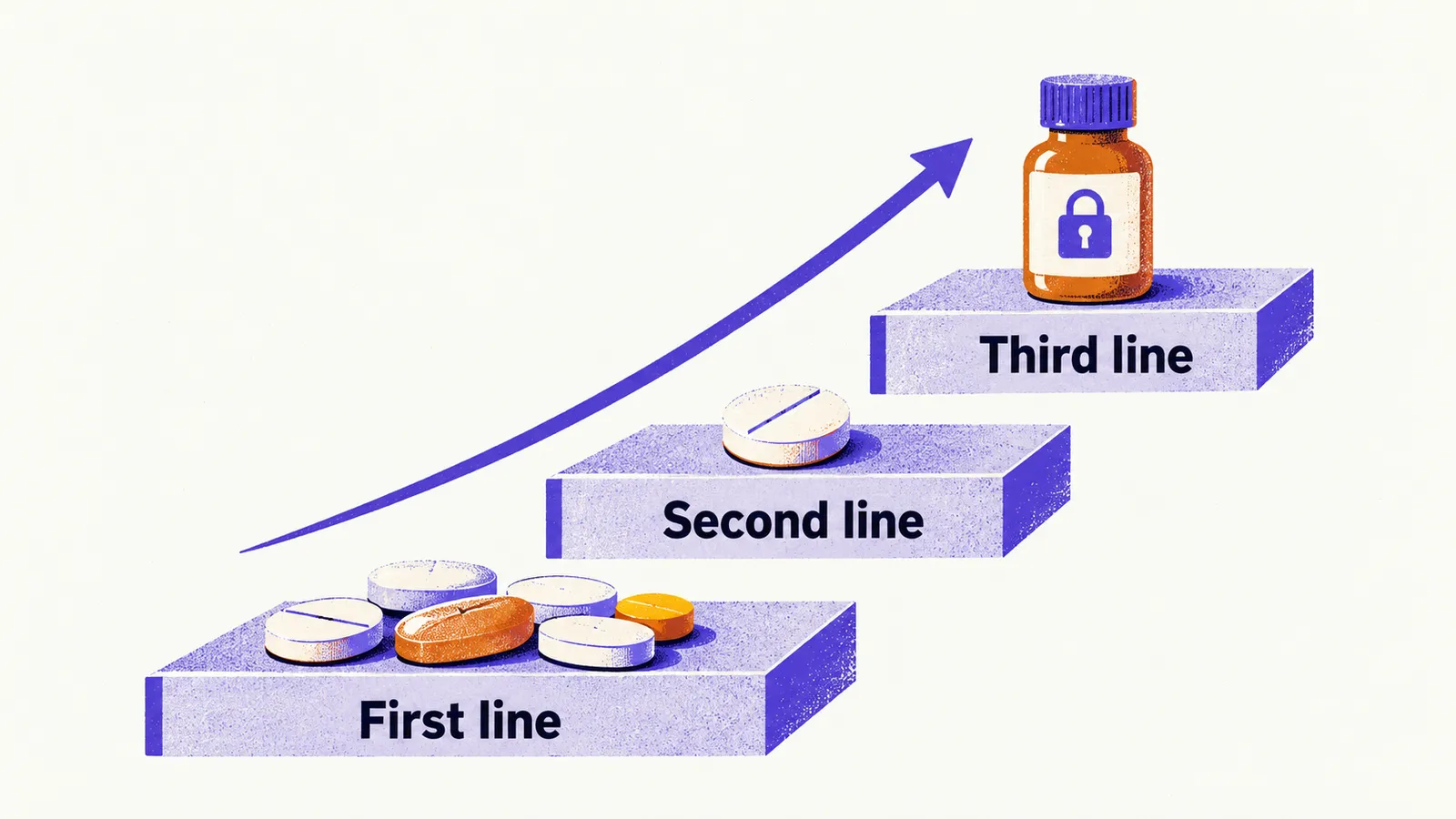
Current guidance recommends amitriptyline, duloxetine, gabapentin, or pregabalin as initial options for neuropathic pain other than trigeminal neuralgia, and if the first choice is ineffective or not tolerated, one of the other three is offered next. Carbamazepine, not one of these four, is the initial treatment for trigeminal neuralgia.
The choice among them follows comorbidity rather than any large difference in efficacy: duloxetine where depression coexists, pregabalin where anxiety dominates, and amitriptyline where insomnia needs covering and anticholinergic effects are tolerable. Renal impairment pushes the dose of gabapentin and pregabalin down, and both are also sedating and carry a potential for misuse.
Representative adult ranges from published reviews are amitriptyline around 75 mg daily, duloxetine 60 mg daily, gabapentin titrated up to about 3600 mg daily in divided doses, and pregabalin 300 to 600 mg daily in divided doses. These are starting points for individual titration, not fixed targets, and roughly a third to two-thirds of patients respond depending on drug and population.
Titration and switching
Each drug is started low and increased towards the lowest effective dose, and a trial is judged only after the dose has been held at a tolerated level long enough to show benefit. Changing one variable at a time makes the response interpretable.
Non-response prompts switching to another first-line agent or combining two of them, commonly gabapentin with a tricyclic (amitriptyline is one), with the predictable cost of added sedation. Combination is reasonable when each drug has produced a partial response on its own, and it is worth reviewing periodically because the added benefit is often small.
Second-line and refractory options
The evidence-based hierarchy places tramadol and topical agents such as lidocaine patches and high-concentration capsaicin patches second line, mainly for peripheral neuropathic pain with a local pain generator. Strong opioids, particularly morphine or oxycodone, are third line: they enter only for refractory pain under time limits because of dependence risk, and they are not a long-term solution for a chronic neuropathy.
What treatment of pain does not do
Pain control runs alongside the search for and treatment of the underlying cause, and it never substitutes for it. Symptomatic relief alone leaves the disease advancing underneath, and it can mask the progression that would otherwise prompt a change in cause-directed therapy. Two practical consequences follow: in painful diabetic neuropathy the analgesia is given while glycemic and vascular risk control continue, and in inflammatory disease the pain regimen is started while immunotherapy is arranged. The drugs used for the cause are described under treatment.